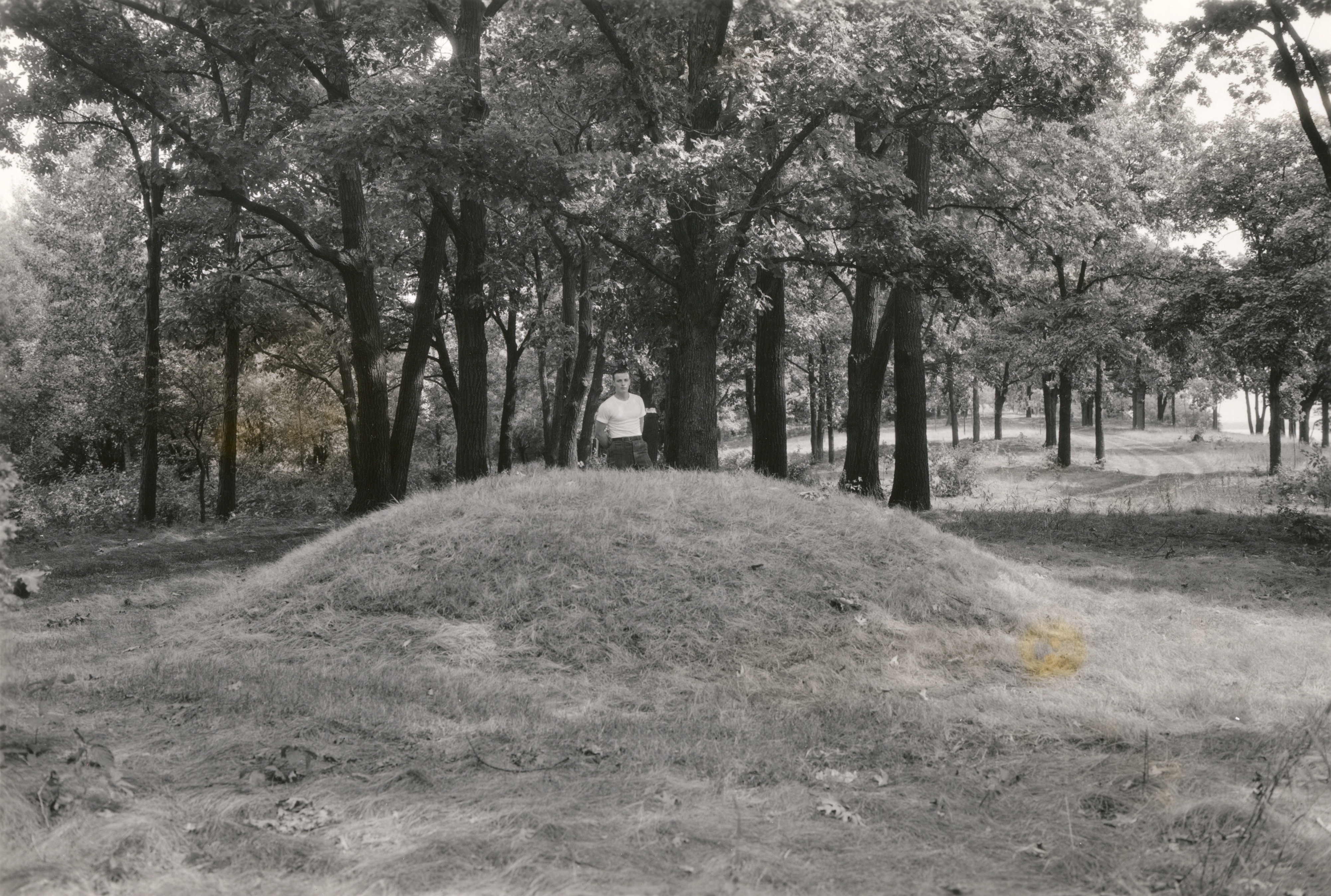
The following experimental digital documentary poem is composed of citations of William Ellery Leonard's new verse translation of the Old English poem Beowulf (1923), Leonard's personal experience narrative of taking part in archaeological fieldwork with Charles E. Brown at an Indigenous Ho-Chunk mound group on the shore of Lake Mendota, in an unpublished manuscript of an autobiographical case study located in the University of Wisconsin—Madison Archives (1920), and "Governors Island," a Ho-Chunk narrative of Lake Mendota by a storyteller once known, collected by Brown in Lake Mendota Indian Legends (1927).
When this MOUND web page is loaded and/or reloaded, server-side code selects and loads a random collection of lines from a relational database of citations:
Thus were we twain together five nights upon the wave.
The stretch of open waters, gazing at the opposite shore.
Shore of Governors Island. Only a few old men have ever.
And the sea up-cast me, flood-tide and swell.
Head after it. In an hour or so we were rummaging around the.
The earth became quiet. The larger panther effigy.
They were lying up along the leavings of the wave.
I had not been under any hallucination or bewilderment.
Lake to retain their good will. When the Earthmaker created.
To fend us from the whale-fish. He could no whit from me.
Not so much so (in my normal state). I ran down to where.
Were frequently at war with the powerful Thunderbirds.
The rolling seas subsided, so that see I might.
Early in June (the 9th or 10th in 1911) I took a long walk.
Shore of Governors Island. Only a few old men have ever.
